Château Meylet
In La Gomerie, David Favard tends old vines with a distinctive approach to winemaking. Gravity, manual work, large barrels and stoneware jars shape an intimate range…
History
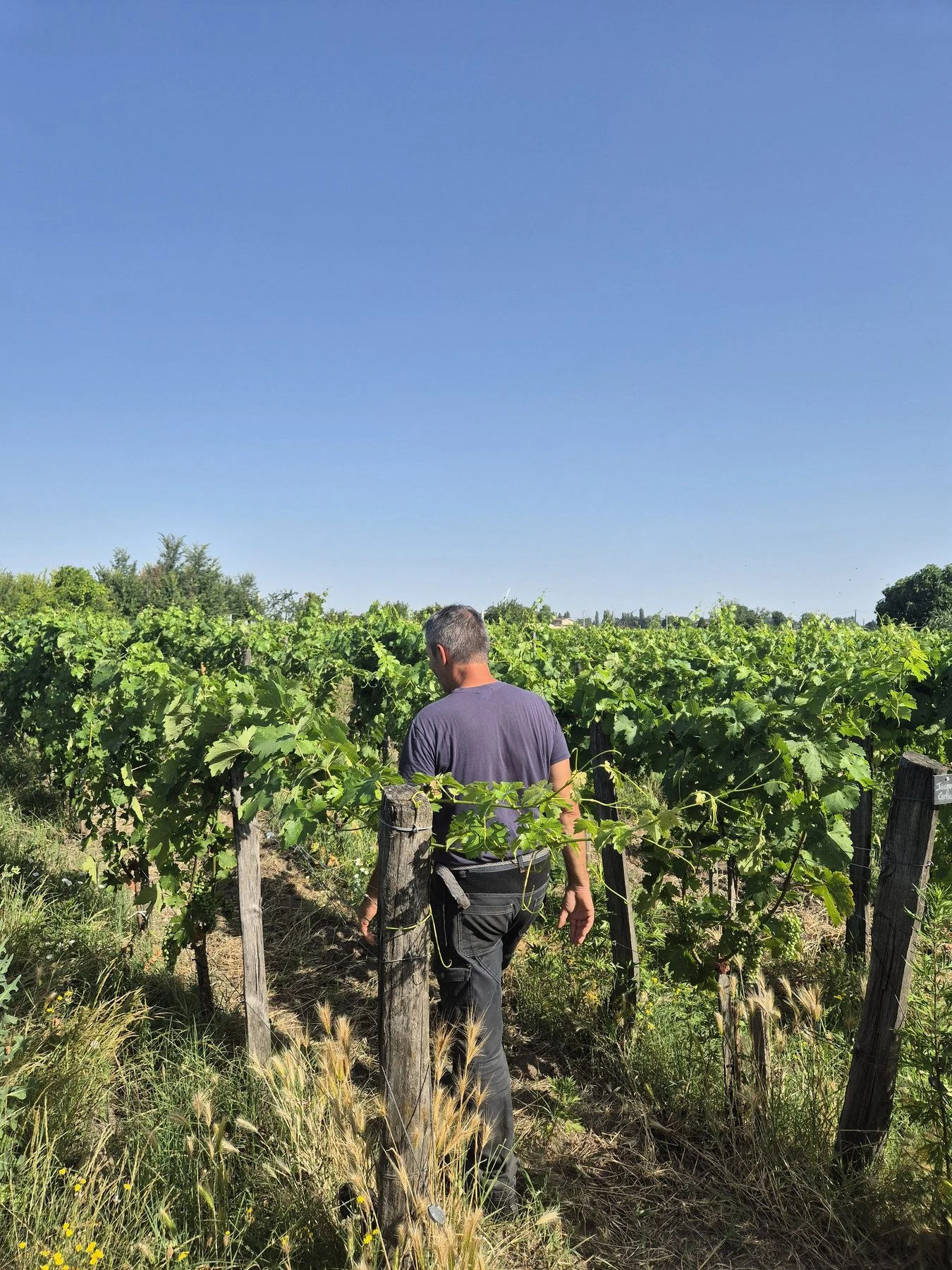
On the limestone slopes west of Saint-Émilion, between Laroze and Franc Mayne, Château Meylet has belonged to the Favard family since 1875. Michel Favard gave it its present name in 1978. David Favard, the fifth generation, continues the work today. Around four hectares are divided into three historic plots: Meylet, La Gomerie and Gravet. Vines are 70–110 years old, with pre-phylloxera plants documented at La Gomerie. Merlot is joined by Cabernet Franc, Cabernet Sauvignon and a little Malbec. Demeter-certified since 1987 and making wines without added sulphites since 1990, Meylet was an early practitioner of biodynamics in Saint-Émilion. Vineyard work is by hand, with part of the land ploughed by horse. In the gravity-fed cellar, the cap is worked with a wooden pole and fermentation uses indigenous yeasts. The dossier describes work without pumps, racking or lees stirring. Wines mature in 500-litre barrels and stoneware jars, seeking elegance rather than power.
Terroir
At La Gomerie, century-old vines include pre-phylloxera plants. Their low yields are part of the estate’s identity. The modest, artisanal cellar relies on gravity, a wooden pole, large barrels and stoneware jars. The house seeks finesse and texture rather than extraction. The library includes vintages back to 1979, with formats and availability to be confirmed individually.
Winemaking
A gravity-fed cellar, wooden-pole punch-downs and indigenous yeasts. Ageing in 500-litre barrels or stoneware jars varies by cuvée. Detailed blends remain tied to the relevant vintage.